The difference between an outfit photo that works and one that does not almost never comes down to the camera. It comes down to three things: the hour, the lens height, and the background. A 2019 phone in good conditions beats a DSLR in bad ones, and that is not a figure of speech.
Light decides everything
Direct sunlight between 11 and 4 creates hard shadows under the nose and chin, flattens colour and blows out whites. It is the worst possible light and it is the one everyone uses, because it is the light that happens to be there once you are dressed.
The three that work:
- Overcast sky. A layer of cloud is a giant diffuser. It is objectively the best free light for photographing clothes, because it renders fabric without crushing contrast.
- Golden hour, an hour after sunrise or before sunset. Warm, low, flattering. It does shift colours, though: white turns cream.
- Open shade. Stand in a building's shadow with clear sky in front of you. This is the midday solution, and it gives a clean neutral result.
Indoors, one rule only: face a window, never stand with your back to it. And switch off the ceiling light, whose yellow mixes badly with daylight and produces colours no edit will rescue.
Lens height, the most common mistake
A phone held at chest height lengthens the torso and shortens the legs. Held above the head it does the reverse and distorts the shoulders.
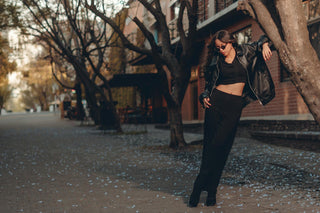
The rule: lens at waist height, or slightly below, for a full-length shot. Every fashion account does this and none of them explains it, and it is the one thing separating an outfit photo from a holiday snap.
Second point: step back and zoom in slightly rather than moving closer. A phone's wide lens distorts everything near the edge of the frame. At two metres with a slight zoom, proportions come out right.
Treat the background like a garment
A busy background turns an outfit into a detail. Three backgrounds that work anywhere: a plain wall, dense even foliage, repetitive architecture such as a railing or a row of columns.
The criterion is not how pretty the place is but how it contrasts with the outfit. A light outfit against a light wall disappears. The same one against a dark door reads. That is exactly the logic of a monochrome outfit, applied to the backdrop.
What photography does to clothes
Some textiles behave badly in front of a sensor, and it has nothing to do with quality.
- Fine stripes and tight small prints moiré. The motif fights the pixel grid and produces waves. Step back a metre or shift the angle slightly and it goes. The subject comes up again in the piece on prints.
- Pure white closes the exposure and darkens the face. Fix it by tapping the face on screen, not the garment.
- Black eats detail. A black jacket shot in the shade becomes a flat mass. It needs slightly raking light for the cut to read.
- Satin and shiny fabrics throw hard highlights. Overcast is their only good light.
The settings worth changing
Turn on the grid in your camera settings: its only job is keeping vertical lines straight, which alone makes a photo look considered. Lock focus and exposure by holding your finger on the subject, otherwise the camera changes its mind between frames and the whole series becomes unusable.
A three-second timer beats a remote: it gives you time to reposition your hands and drop your shoulders, which is the thing everybody forgets.
And shoot a burst rather than chasing one perfect frame. Out of twenty, two are good, and they are never the ones you expected.
Our best sellers and jewellery photograph well, but the thirty-second quality test is more useful still: what shows in a photograph is the finishing.
Free shipping over €35 and 30-day returns.