How to Create a Successful Monochromatic Look
A single-colour outfit is the most efficient shortcut to looking taller and more polished. It is also the one that turns into hospital pyjamas fastest if you simply grab three pieces in the same shade.
Why it works, physically
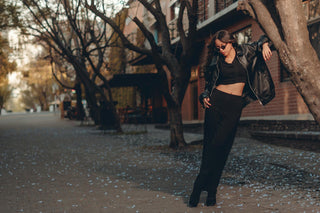
The eye reads a silhouette through its breaks. Dark trousers under a light top create a horizontal line at the waist: the gaze stops there and cuts the body into two blocks. A single-colour outfit removes that line, and the gaze travels top to bottom without interruption.
The effect is measurable: the same person reads as longer in monochrome than in a contrasting outfit, same body, same everything. It is the one styling trick whose mechanism fits in a sentence.
Texture does all the work
Without variation in material, monochrome is flat. With it, it becomes rich. That single point separates a good outfit from a uniform.
The principle: three surfaces that reflect light differently. A matte ribbed knit, a satin shirt, crepe trousers. Or crumpled linen, smooth leather, dense cotton. The colour stays identical, the light changes at every piece, and the outfit gains depth.
The fabric breakdown is directly useful here: the cloth decides the sheen, not the price.
Tonal is not monochrome
An important distinction, and one that gets confused. Strict monochrome uses one shade. Tonal varies lightness within the same family: light beige, camel, chocolate.
Tonal is easier to pull off, because it tolerates dye differences between pieces. But it puts horizontal lines back in, so the lengthening effect drops. The trade-off worth knowing: keep the darkest piece at the bottom and the lightest on top. The reverse compresses.
The forgiving colours
- Camel and beige: the most flattering, they bounce light up towards the face. They do demand serious upkeep.
- Navy: softer than black on fair complexions, and far less sensitive to dye differences from one piece to another.
- Olive and khaki: the easiest to assemble from pieces of different origins, because the eye never pins down the exact shade anyway.
- Black: the hardest, contrary to what everyone assumes. Two blacks from different dye baths are obvious in daylight, one pulling brown, the other blue.
Breaking it without destroying it
A full monochrome can lack a focal point. Three ways to add one without breaking the vertical:
- The shoe. It is the lowest point, so it does not cut the silhouette. A gold sandal or a white trainer under a camel outfit works.
- Jewellery. Metal brings shine, which is not a colour, so it breaks nothing. Our jewellery often plays that single role.
- The bag. Held in the hand or on a short strap, it falls outside the central axis. Our bags cover both carries.
What not to do: a contrasting belt. It recreates exactly the horizontal line monochrome had removed.
The dress case
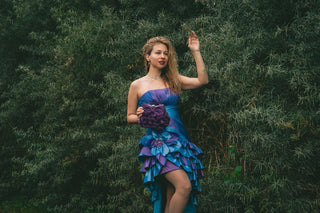
A long dress is monochrome by construction, with no risk of dye mismatch between pieces. It is the simplest version of the exercise and the most effective. Our flowing dresses and boho dresses suit it, and the guide to choosing a long dress explains how hem and shoe decide the final effect.
On white, which is a monochrome of its own with its own traps, wearing white without mishaps covers the sheerness question.
Free shipping over €35 and 30-day returns. Comparing two blacks in daylight, at home, is the only way to know whether they agree.


Shop the Best Sellers edit
-
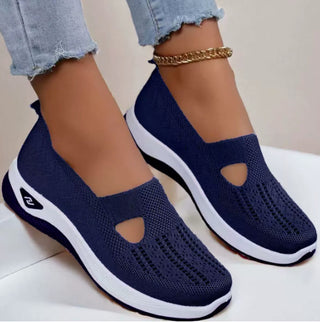 SNEEK Comfort Sneakers for Women — Memory Foam Insole, Breathable Knit
37,99 €
SNEEK Comfort Sneakers for Women — Memory Foam Insole, Breathable Knit
37,99 €
-
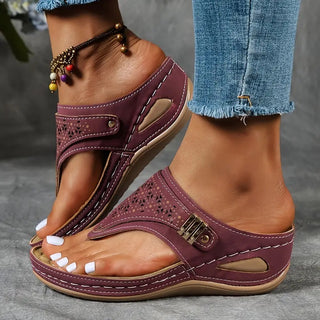 Élise Comfort Sandals — Contoured Footbed, Wide Straps
34,99 €
Élise Comfort Sandals — Contoured Footbed, Wide Straps
34,99 €
-
 Hivery Winter Shoes — Warm Lining, Cushioned Sole
34,90 €
Hivery Winter Shoes — Warm Lining, Cushioned Sole
34,90 €
-
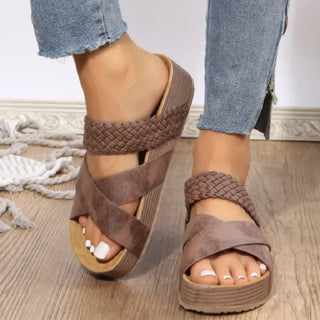 Women's Woven Casual Sandals - Summer Comfort
31,99 €
Women's Woven Casual Sandals - Summer Comfort
31,99 €