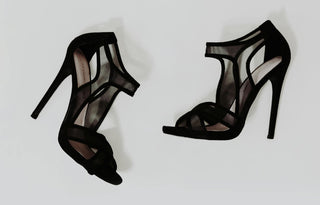
Flats or heels: choosing by occasion
The debate is framed wrong. The right question isn't "flats or heels", it's "how long will I be standing, and on what surface". A three-hour seated meeting and a trade show where you shuffle around on concrete do not call for the same shoe, even if the outfit is identical.
The only criterion that matters: time on your feet
Here's the grid we use, and it holds for just about any situation.
- Under an hour standing: whatever you like. This is the slot for high heels, for the pair that isn't sensible but makes the outfit.
- One to three hours: a 3 to 5 cm heel, or a wedge. Height is fine as long as the weight is spread.
- More than three hours: cushioned flat or a wide wedge. A thin heel over that stretch is a guaranteed bad memory.
- All day with walking: flexible sole, support at the back. That's it.
The wedge deserves a moment, because it's misunderstood. It gives you the height of a heel, but the platform under the forefoot reduces the actual angle of the foot and the contact area with the ground is far wider. In plain terms: you gain 6 cm with the stability of a flat shoe. It's the best compromise that exists.
Height with stability


The surface changes everything
A thin heel on parquet or carpet is a non-issue. The same heel on cobbles, a metro ventilation grate or a wedding lawn, and you spend the evening watching your feet instead of talking to people. Garden gravel is the single worst terrain for a stiletto.
Before choosing, ask yourself what you'll be walking on. It's a mundane question, almost nobody asks it, and it prevents half of all bad evenings.
By occasion
Office. A 3–5 cm heel with a strap, or a flat with a cushioned sole. The strap stops you clenching your toes to keep the shoe on, and that clenching is what tires you out, more than the height.
Wedding, reception. Long stretches standing, often outdoors, sometimes on grass. The wedge is the obvious answer. If you insist on a court shoe, put foldable flats in your bag: everyone does it after 11pm anyway, so you may as well plan for it.
City, errands, museums. Cushioned flat or a smart sneaker. A museum is three hours upright at walking-pace-zero, which is the worst possible scenario for feet — worse than an actual walk, where the movement keeps things circulating.
Travel, airports. Closed, flexible, easy to slip off at security. Allow room: feet swell on planes, especially past the two-hour mark.
Dinner, a seated evening. This is where high heels belong. You walk from the taxi to the table, so you might as well enjoy them.
Dressy, for seated evenings


The myth of the always-comfortable flat
A flat shoe with no cushioning isn't comfortable, it's just flat. Every step sends the shock straight into the heel, then the knee. If you've ever had sore heels on your first steps in the morning, you know the problem.
What to check on a flat: the thickness of the midsole, the flex point at the toes (bend the shoe in half in the shop, it should fold at the front third, not in the middle), and the width at the toe box. A decent flat inevitably costs a bit more than a ballet pump with a paper sole.
Flats with real cushioning


Two rules to finish on
First: never debut a pair on the day you'll need it all day. Wear it two or three times for a couple of hours at home, on a clean floor. You'll know immediately whether it rubs anywhere, and you can still send it back.
Second: rotate. Wearing the same pair every day wears out your feet as much as the shoe. Two pairs in rotation last considerably longer than two pairs worn one after the other.
All our shoes are gathered in this collection, and the models built for walking are here.
Read next
- Office shoes: eight hours without suffering
- Heel pain in the morning: what the shoe changes
- Feet that swell in summer: what to wear
Unsure about a size or a fabric before ordering? Email support@voltelan.com and we answer within 24 working hours. Returns are possible within 30 days if the piece doesn't work out.
Shop the Best Sellers edit
-
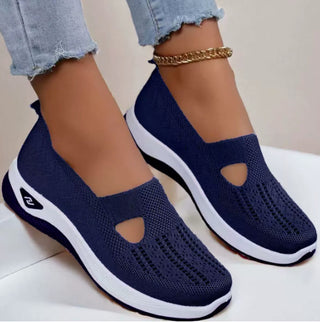 SNEEK Comfort Sneakers for Women — Memory Foam Insole, Breathable Knit
37,99 €
SNEEK Comfort Sneakers for Women — Memory Foam Insole, Breathable Knit
37,99 €
-
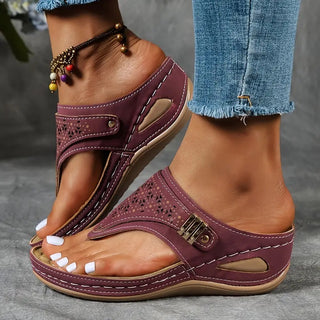 Élise Comfort Sandals — Contoured Footbed, Wide Straps
34,99 €
Élise Comfort Sandals — Contoured Footbed, Wide Straps
34,99 €
-
 Hivery Winter Shoes — Warm Lining, Cushioned Sole
34,90 €
Hivery Winter Shoes — Warm Lining, Cushioned Sole
34,90 €
-
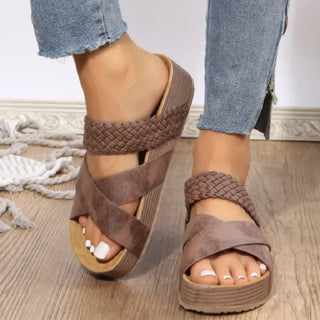 Women's Woven Casual Sandals - Summer Comfort
31,99 €
Women's Woven Casual Sandals - Summer Comfort
31,99 €