

Heel pain first thing in the morning: choosing shoes when you walk a lot
Share
The pattern is unmistakable: the first three steps out of bed happen on tiptoe, with a burn under the heel. It eases after a few minutes of walking, comes back at the end of the day, and is worse the morning after a long walk.
Let us be clear from the start: this is about shoes, not treatment. Heel pain lasting several weeks gets looked at by a doctor or a podiatrist, who will make a diagnosis and may prescribe custom insoles. No pair sold online replaces that. Once the diagnosis is made, though, the shoes you wear eight hours a day weigh heavily on daily comfort, and there are concrete things worth knowing.
Why it hurts most when you wake up
Overnight the foot rests, extended. The tissue under the sole tightens slightly. The first time you put weight on it, everything is pulled taut at once. That explains the apparent paradox: it is not effort that triggers it, it is restarting after stillness. The same thing happens after an hour sitting at a desk or in a car.
Second consequence, less well known: a foot that hurts protects itself by changing your gait. You roll through less, you load the outside edge more, and after a few weeks the knee or hip on the same side starts complaining. That is not a new problem. It is compensation.
Four criteria, in order of importance
1. Cushioning under the heel, not everywhere
That is the impact point. A sole that absorbs shock in that precise spot cuts the load on every step. Over a day of walking you are talking thousands of repetitions, and that is where the difference between a normal evening and an evening with your legs up gets decided.
2. A small heel-to-toe drop
Counter-intuitive but essential: a perfectly flat sole is the worst choice. Thin ballerinas, flip-flops, flat rope espadrilles, beach sandals. They all put the sole of the foot under maximum tension. A slight drop, a few millimetres, releases it. It is also why plenty of people feel better in sneakers than in slippers.
3. A firm heel counter
The counter is the rigid cup at the back. Pinch it between two fingers. If it collapses without resistance, the heel will roll sideways on every step. You want it to hold. It is a ten-second test that eliminates half the cheap models.
4. Limited torsion
Take the shoe at both ends and wring it like a cloth. It should resist. A shoe that twists without effort supports nothing at all. It should, on the other hand, bend easily at the front, at the toes, and only there.
Three pairs that tick those boxes
The SNEEK sneakers with a memory-foam sole (37,99 €) are the default pick for a day on your feet: the foam compresses under the heel and the breathable upper avoids the pressure-cooker effect in summer. That is what I would take for a city visited on foot.
The ultra-light sneakers (44,90 €) answer a different problem. When pain has you dragging your feet by evening, every gram counts: the weight of the shoe adds to the fatigue on every stride.
The breathable sneakers (37,99 €) are the compromise when sweat enters the equation, typically in summer or for someone walking indoors all day.
The full selection is gathered in walking shoes, and the dressier styles that keep decent cushioning are in women's comfort shoes.
What makes it worse, without you thinking about it
- Walking barefoot on tiles. A hard floor with nothing in between is the worst moment of the day. A pair of thick-soled slippers by the bed changes more than a lot of purchases do.
- Keeping a pair past its life. Cushioning packs down. After 500 to 800 km the foam stops springing back: the shoe looks new on top and has stopped doing its job underneath. Look at the wear on the outsole, not the state of the upper.
- Ramping back up too fast after a break. Two months without walking, then ten kilometres on the first weekend. Load has to come back gradually.
- Swinging between high heels and flats. Court shoes all week then flat sandals on Saturday means two opposite tensions in two days.
The insole question
If you wear prescribed orthotics, check before buying that the original insole comes out. A glued-in sole will not take them without leaving your foot sitting too high in the shoe. It is rarely stated on a product page, but it takes ten seconds to test when the parcel arrives: slide a fingernail under the back edge of the insole and pull.
For everything else, your own test is the best one. A shoe that suits you shows it the next morning, not at the moment you try it on.
Shop the Best Sellers edit
-
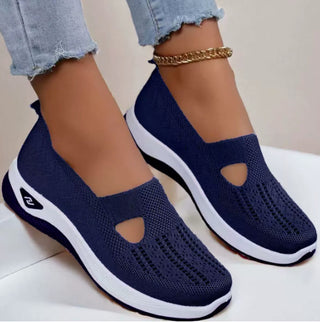 SNEEK Comfort Sneakers for Women — Memory Foam Insole, Breathable Knit
37,99 €
SNEEK Comfort Sneakers for Women — Memory Foam Insole, Breathable Knit
37,99 €
-
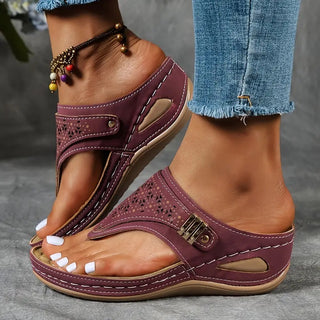 Élise Comfort Sandals — Contoured Footbed, Wide Straps
34,99 €
Élise Comfort Sandals — Contoured Footbed, Wide Straps
34,99 €
-
 Hivery Winter Shoes — Warm Lining, Cushioned Sole
34,90 €
Hivery Winter Shoes — Warm Lining, Cushioned Sole
34,90 €
-
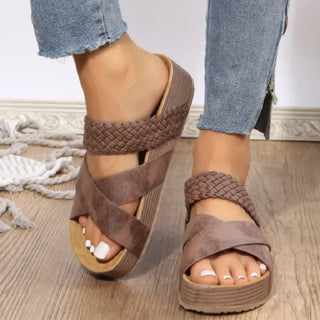 Women's Woven Casual Sandals - Summer Comfort
31,99 €
Women's Woven Casual Sandals - Summer Comfort
31,99 €

