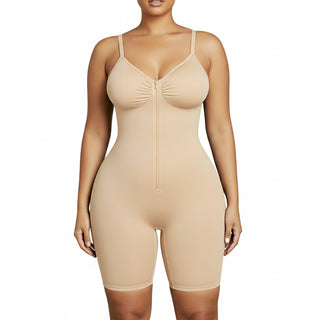
Heavy Legs: 7 Tips That Actually Work
Legs swell by the end of the day, socks leave a mark above the ankle, and by the evening all you want is to lie down. It's common, particularly from your forties onwards, and it has a simple mechanical explanation: blood has to travel back up from your legs to your heart against gravity, and it doesn't do it on its own. The calf muscles push it, with every step. The less you move, the less the pump works.
All seven habits below act on that same mechanism.
1. Move every hour, even for thirty seconds
Staying still, sitting or standing, is what makes heaviness worse. You don't need to walk: rise onto your toes and lower your heels, twenty times. The calf contracts and the pump restarts. Done hourly, that one move changes the end of a day.
At a desk, the discreet version works too: lift your heels off the floor while keeping the toes down, alternating, for a minute.
2. Raise your legs in the evening
Fifteen centimetres is enough. A firm cushion under the calves, not under the knees, or two thick books under the foot end of the bed. The point is to have your ankles higher than your heart for twenty minutes, long enough for the fluid gathered during the day to drain back.
A bent knee blocks part of the return, so lying with your legs straight up against a wall for ten minutes is both the most effective and the simplest version.
3. Cold water, from the bottom up
At the end of your shower, run cold water over your legs starting at the ankles and moving up towards the thighs, one leg then the other, thirty seconds each. Cold tightens the vessels and the lightness is immediate.
Direction matters: bottom to top, the way the blood needs to go. And avoid very hot baths, long saunas and underfloor heating in winter, which do exactly the opposite.
4. Hunt down whatever is tight in the wrong place
A sock with a hard elastic band, a boot tight at the calf, trousers pressing into the groin crease or an over-tightened belt block circulation above, and the swelling forms below. The red mark still there twenty minutes after taking the sock off is the giveaway.
A too-narrow shoe does the same thing on a smaller scale: squeezed toes stop the foot rolling through, so the calf does less work. That's also why a shoe with room at the front relieves heavy legs without changing anything else.
5. Drink more, salt less
Counter-intuitive but mechanical: the less you drink, the more the body holds on to the little water it has. A litre and a half spread across the day beats one large glass in the evening. Salt holds water in the tissues, and most of what you eat doesn't come from the salt cellar but from ready meals, bread, cheese and cured meat.
6. Shoes that make the calf work
Neither a high heel, which locks the calf in a shortened position, nor a completely flat sole, which absorbs nothing. The right compromise is a small drop, two to three centimetres, with a sole flexible at the front so the foot can roll from heel to toe.
Add width at the front and a material that doesn't tighten late in the day, once the foot has swollen. The SNEEK Breathable Comfort and the adjustable-strap sandals are built for that: the mesh follows the swelling instead of fighting it. If you're between sizes, take the larger — our sizing guide explains how to measure properly.
7. Compression socks, for the right reasons
They apply graduated pressure, stronger at the ankle and lighter at the calf, which helps blood travel back up. Comfort models sold without a prescription sit around 15 to 20 mmHg and suit a long day on your feet, a long-haul flight or a drive.
Two honest caveats. They go on in the morning, before the leg has swollen, not in the evening once the damage is done. And medical compression, the kind measured in classes and prescribed, is a doctor's business: it isn't the same thing. Our compression socks also come in a bundle with the sneakers, which combines both levers, the shoe and the sock.
When it stops being about comfort
These habits relieve ordinary heaviness linked to heat, standing or a day of flying. They don't replace medical advice. See a doctor if one leg swells suddenly, if the skin becomes hot, red or painful to touch, if the swelling comes with breathlessness, or if the heaviness settles in with no relation to the day you've had. Those are things to get checked, not things to put up with.
If you want to put this into practice


Shop the Best Sellers edit
-
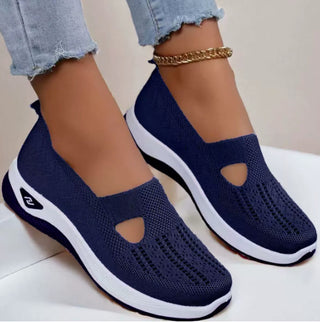 SNEEK Comfort Sneakers for Women — Memory Foam Insole, Breathable Knit
37,99 €
SNEEK Comfort Sneakers for Women — Memory Foam Insole, Breathable Knit
37,99 €
-
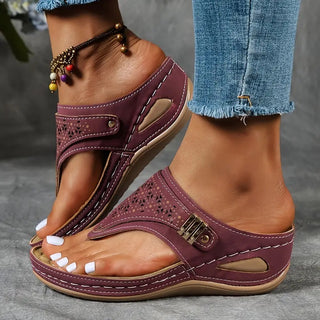 Élise Comfort Sandals — Contoured Footbed, Wide Straps
34,99 €
Élise Comfort Sandals — Contoured Footbed, Wide Straps
34,99 €
-
 Hivery Winter Shoes — Warm Lining, Cushioned Sole
34,90 €
Hivery Winter Shoes — Warm Lining, Cushioned Sole
34,90 €
-
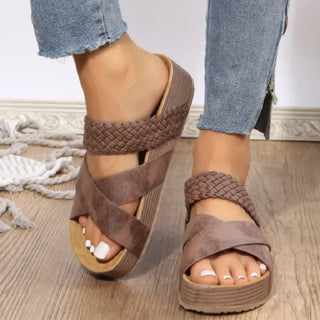 Women's Woven Casual Sandals - Summer Comfort
31,99 €
Women's Woven Casual Sandals - Summer Comfort
31,99 €