The Secrets to a Well-Organized Wardrobe: Methods and Tips
You open your closet in the morning and it's like looking into a black hole. You know "that dress" is somewhere in there, but you can't find it. In the end, you put on the same jeans and sweater as yesterday. Does this sound familiar?
A well-organized wardrobe isn't a luxury reserved for people with 20 square meter walk-ins. It's a method. And anyone can apply this method, regardless of the space available.
Step 1: The big sort (the real one)
Take everything out. Every piece of clothing, every accessory, every pair of shoes. Put it all on your bed. Yes, it's scary. That's the point. You need to see the extent of the problem in order to solve it.
Then, create 4 piles:
- I keep: pieces that you wear regularly and make you feel good
- To give away/sell: what's in good condition but you no longer use
- To repair: missing button, torn hem - give yourself a week to do it, otherwise it goes
- Trash: stains, holes, worn beyond reasonable
Step 2: Organize by category
Not by color (it looks nice on Instagram but it's impractical). By CATEGORY:
- Dress section: dresses, blazers, shirts — the pieces you wear for special occasions
- Daily section: jeans, t-shirts, sweaters — the core of your wardrobe
- Sport/relaxation section: leggings, sports bras, hoodies
- Seasonal section: off-season pieces at the top of the closet or under the bed
- T-shirts (fold vertically like Marie Kondo — standing in the drawer, not stacked)
- Sweaters and knits (NEVER on hangers, it deforms the shoulders)
- Jeans
- Underwear and socks
- Shirts and blouses (on thin hangers, not the big plastic ones)
- Dresses
- Suits and jackets
- Formal pants (folded on the hanger bar)
- Jewelry: in an organizer with compartments, NOT in a bowl in a jumble
- Shoes: with shoe trees or silk paper, in clear boxes or on a rack
- Bags: filled with tissue paper to keep their shape, standing upright on a shelf
- Hair accessories: in a small basket or wall organizer
- Store off-season items in breathable covers (no plastic - it causes mold)
- Take out the pieces for the upcoming season
- Take advantage of this to eliminate what you didn't wear all of the previous season - if you haven't worn it in 6 months, you probably never will
- Identical hangers (in fine velvet): visually harmonizes and saves space
- Transparent storage boxes: for shoes and accessories
- A full-length mirror: to check the complete look before going out
- A hook behind the door: for tomorrow's outfit, prepared the night before
Within each section, THEN you can sort by color. From lightest to darkest. It helps visualize quickly what you have.
Step 3: The storage rules
What folds
What hangs
What goes in a separate section
Step 4: The "one in, one out" rule
This is the rule that maintains order in the long term. Every time you buy a new piece, an existing piece must go out. Not "someday". Now. Even before removing the tag from the new garment, choose which one leaves.
Step 5: The seasonal rotation
Twice a year (March and October), do the rotation:
The game-changing investments
A well-organized closet saves you 15 minutes every morning. Over a year, that's 90 hours. Almost 4 whole days. Imagine what you would do with 4 extra days per year.
Fill your closet with pieces worthy of their place. Discover our collection of essentials.
Our models that answer this need


Shop the Women's Dresses edit
-
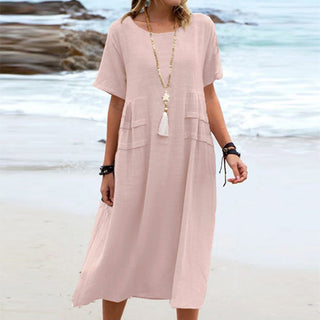 Fluid Midi Dress Cotton-Linen Women's - Bohemian Summer
39,90 €
Fluid Midi Dress Cotton-Linen Women's - Bohemian Summer
39,90 €
-
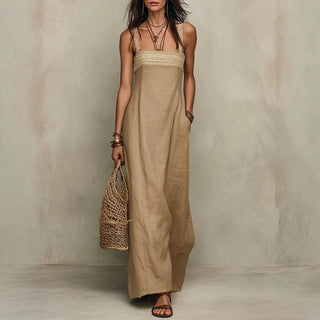 Long Linen Lace Dress for Women - Natural Bohemian Style
44,90 €
Long Linen Lace Dress for Women - Natural Bohemian Style
44,90 €
-
 Long Linen-Cotton Summer Dress with Straps - Two-Tone
39,90 €
Long Linen-Cotton Summer Dress with Straps - Two-Tone
39,90 €
-
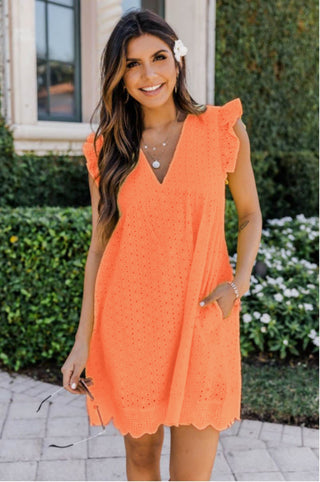 Women's Embroidered Dress with Built-In Shorts
34,99 €
Women's Embroidered Dress with Built-In Shorts
34,99 €