How to Create a Perfect Bohemian Chic Look
Bohemian chic is the easiest style to get wrong, because it rests on an apparently free accumulation that in fact follows strict rules. Between an outfit that looks considered and one that looks like fancy dress there is often a single accessory.
What bohemian chic isn't
It isn't 1970s boho rebuilt to the letter, and it isn't a festival outfit. The version you can wear in a city rests on three pillars: natural materials, a silhouette with at least one structured point, and a tight palette.
The difference is mostly one of quantity. Festival boho adds everything available; bohemian chic subtracts until two or three identifiable elements are left.
The palette: three colours, no more
Ecru, beige, terracotta, khaki, brown, rust, off-white — the style rests on the colours of materials rather than bright ones. Take three for a complete outfit, two of them neutral.
One accent is allowed: a deep red, an indigo blue, an olive green. Two accents and the outfit starts to scatter; three and it looks like accidental patchwork.
Layer textures, not prints
This is the point most failed outfits get backwards. Bohemian chic layers different textures in close colours: crumpled cotton, broderie anglaise, suede, a chunky knit, fringing. The eye reads richness without being saturated.
Two different prints in one outfit, on the other hand, almost always fight. If you want a print, let it be the only one and keep everything else plain. A paisley print over an embroidered top is the same intention twice in the same place.
One structured point, non-negotiable
Without it the outfit becomes a pile of floating fabric and the silhouette vanishes. The structured point can be a belt, wide or fine, at the waist; a short clean jacket; raw denim under a loose blouse; or simply a fitted top under a full skirt.
Look at any bohemian outfit that works and you'll find that point: somewhere, a clean line contradicts the general softness. That contrast is the difference between dressed and wrapped.
Jewellery, the easiest part to ruin
The style invites stacking, which is not the same as random accumulation. Two principles hold: one metal across the whole outfit, and one loaded zone.
Stacked bracelets go with bare ears. Large earrings go with a bare neck. The worst result comes from three moderately loaded zones, where nothing stands out and everything becomes background noise. See our jewellery
Shoes and bag
Flat leather sandals, low-heeled ankle boots, espadrilles: simple shapes in matt materials. Patent and shine belong to another vocabulary and get spotted instantly among natural materials.
Same logic for the bag: soft leather, straw, suede, a shape that doesn't look rigid. A soft shoulder bag completes the line; a structured bag with sharp corners contradicts it.
A complete outfit, as an example
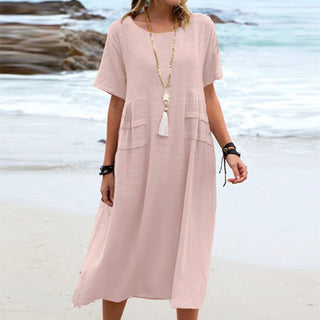
A plain earth-toned long dress, a fine leather belt at the natural waist, a raw denim jacket, flat camel sandals, one wide bracelet, a soft leather bag. Six items, three colours, one jewellery zone, one structured point.
Take the belt away and the outfit goes limp. Add a necklace, earrings and a hat and it becomes a costume. That narrow margin is what defines the style, which is why it's better to remove something than to add one more thing on the way out.
See our bohemian dresses · For the long-dress version in detail: how to wear a bohemian dress.
Pieces from the shop that go with this


Shop the Best Sellers edit
-
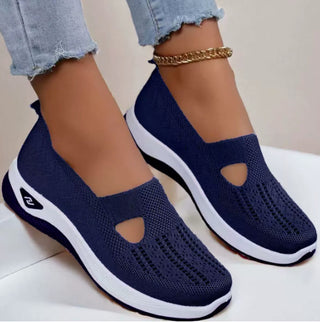 SNEEK Comfort Sneakers for Women — Memory Foam Insole, Breathable Knit
37,99 €
SNEEK Comfort Sneakers for Women — Memory Foam Insole, Breathable Knit
37,99 €
-
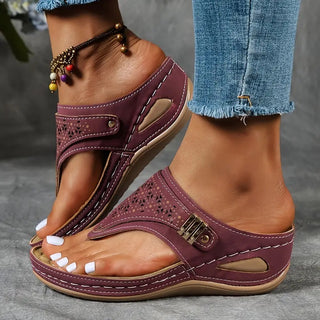 Élise Comfort Sandals — Contoured Footbed, Wide Straps
34,99 €
Élise Comfort Sandals — Contoured Footbed, Wide Straps
34,99 €
-
 Hivery Winter Shoes — Warm Lining, Cushioned Sole
34,90 €
Hivery Winter Shoes — Warm Lining, Cushioned Sole
34,90 €
-
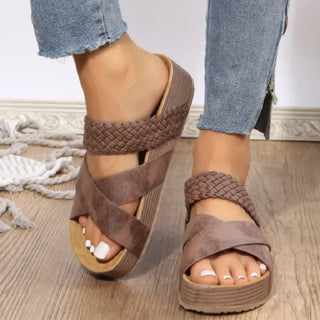 Women's Woven Casual Sandals - Summer Comfort
31,99 €
Women's Woven Casual Sandals - Summer Comfort
31,99 €