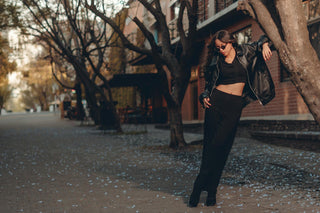
Style after 60: what really changes (and what doesn't)
There is a depressing amount of content explaining to women over 60 what they are "no longer allowed" to wear. Long hair, jeans, prints, bright colours, necklines: the list of prohibitions changes every five years and has never rested on much. This piece takes the opposite approach. What actually changes, physically, and how you dress around that rather than around a made-up rule.
What genuinely changes
Three things, mainly, and none of them has anything to do with style.
- Feet get wider and longer. Ligaments loosen over the years and the arch drops a little. Plenty of women have worn the same size for thirty years while having gone up a full size. This is the leading cause of foot pain, far ahead of heel height.
- Skin tolerates abrasive fabrics less well. Rigid seams, tight elastic and scratchy wool become genuinely unpleasant. That's not fussiness.
- Temperature regulation shifts. Cold hands and feet are more common, and so are sudden hot spells. Hence the case for layers you can take off, rather than one thick jumper.
Start by getting your feet measured again
Seriously. Before buying anything else. Put your foot on a sheet of paper, draw around it, measure from heel to longest toe, add 5 to 7 mm and compare against a size chart. If you land a size above what you usually buy, you have just solved a problem you've been carrying for years.
Then look for three things in a shoe: a sole that cushions, enough width at the front, and support at the heel or ankle. The rest is taste.
Forgiving shoes


Comfort comes from fabric, not from cut
Linen, cotton-linen, flowing viscose, fine knit: these move with you and squeeze nowhere. Rigid polyester and a wide band of elastic at the waist, on the other hand, turn a good day into a day spent adjusting your clothes.
A word on elasticated waists: they have a bad reputation because we associate them with loungewear. An elasticated waist set under a clean waistband, on wide trousers in a fabric that hangs, is invisible and goes anywhere. It's probably the best value piece in the wardrobe after 60.
Comfort that doesn't show


Layering, against the cold and for the silhouette
An open longline cardigan over a plain top solves two problems at once: it comes off when the room is overheated, and its two vertical panels lengthen the line. Same for a light jacket kept over the shoulders. Three thin layers beat one thick jumper you can't remove once you're committed.
What stays, and what to own
Bright colours work very well near the face — that's the best place to put them, in fact. Jeans have no age, provided there's a little elastane and the rise is high. Long dresses are easier to wear than knee-length ones once you'd rather not show your legs, and far more elegant than people assume.
What ages an outfit is never the piece, it's the state of the piece: a bobbled knit, trousers gone baggy at the knee, a heel worn down on one side. Three immaculate pieces beat fifteen tired ones.
The details people forget
- A front-fastening bra, for when reaching behind your back gets awkward. It sounds trivial; it changes the morning.
- Light compression socks for long journeys, flights, or days on your feet.
- A hem taken up. A few euros at a tailor turns an acceptable pair of trousers into a pair that fits.
The basics people skip


Our comfort selection is gathered in the comfort shoes collection, and the whole shop is this way.
Read next
- Walking shoes at 60 and over: the full guide
- Feet that swell in summer: what to wear
- Hot flushes: the fabrics and cuts that actually help
Unsure about a size or a fabric before ordering? Email support@voltelan.com and we answer within 24 working hours. Returns are possible within 30 days if the piece doesn't work out.
Shop the Best Sellers edit
-
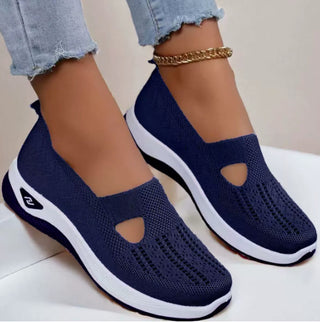 SNEEK Comfort Sneakers for Women — Memory Foam Insole, Breathable Knit
37,99 €
SNEEK Comfort Sneakers for Women — Memory Foam Insole, Breathable Knit
37,99 €
-
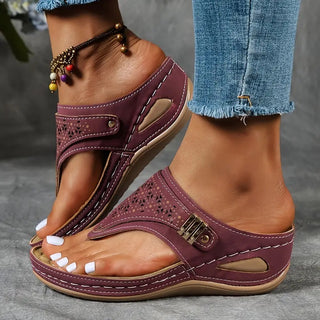 Élise Comfort Sandals — Contoured Footbed, Wide Straps
34,99 €
Élise Comfort Sandals — Contoured Footbed, Wide Straps
34,99 €
-
 Hivery Winter Shoes — Warm Lining, Cushioned Sole
34,90 €
Hivery Winter Shoes — Warm Lining, Cushioned Sole
34,90 €
-
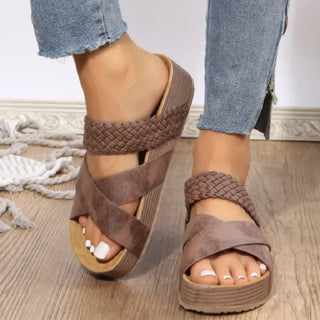 Women's Woven Casual Sandals - Summer Comfort
31,99 €
Women's Woven Casual Sandals - Summer Comfort
31,99 €