Which Shoes for Sensitive Feet? What Actually Makes a Difference
A sensitive foot is not fixed with a gel insole bought in a hurry. What actually changes things is the shoe itself: its width, its heel height, the way the sole behaves in the third hour. Here is what to look at, and what to stop looking at.
Width before size
Most forefoot pain comes from a shoe that is too narrow, not too short. If your toes touch when you stand, go up half a size or change model. A foot spreads under load: measure it at the end of the day, standing, both feet, since they are rarely the same size and the bigger one decides.
With hallux valgus the rule is simpler still: anything that presses on the joint is out, including the soft models that are supposed to give with wear. They do not give. Your foot does.
The heel: neither zero nor ten
A completely flat sole is not the universal answer people think it is. It pulls on the Achilles tendon and tires the arch. Two to four centimetres on a wide base often carries a whole day better than a flat ballet pump with no relief at all. A wedge with a 4 cm heel spreads the load along the whole foot, where a thin heel concentrates everything at the front.
What happens under the foot
A memory-foam insole follows the arch instead of leaving it unsupported. That slight hollow under the arch is what makes the difference after three hours standing, far more than the thickness printed on the box.
Three pairs that hold up all day
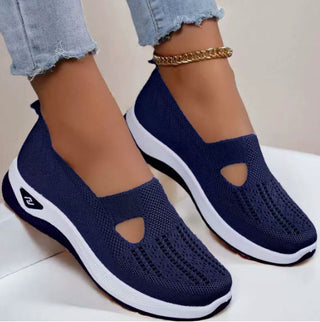
The SNEEK sneakers (EU 35 to 43) are the pair our customers reorder most: breathable mesh, memory-foam insole, non-slip outsole. This is the walking-day and travelling pair.
The Élise sandal (EU 35 to 43) has a contoured footbed under the arch and wide straps, the kind that leave no mark across the top of the foot. For summer days on your feet.
The round-toe flats (EU 35 to 43) leave room for the toes, which no pointed flat does. They go to the office without looking like comfort shoes.
Two habits that change everything
Alternate your pairs day to day: a shoe needs twenty-four hours to dry out completely, and a damp lining loses its shape. And never test a new pair over a full day. Two hours at home first, on carpet, to find the rubbing points while returning them is still possible.
If the pain persists in good shoes, see a podiatrist: no pair, however comfortable, replaces a diagnosis. The rest of the comfort shoe range is here, with 30-day returns.
Pieces from the shop that go with this


Shop the Best Sellers edit
-
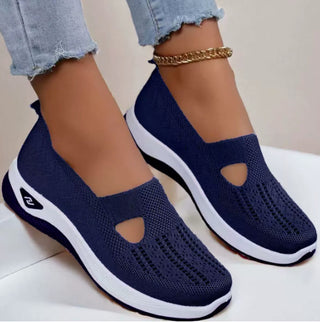 SNEEK Comfort Sneakers for Women — Memory Foam Insole, Breathable Knit
37,99 €
SNEEK Comfort Sneakers for Women — Memory Foam Insole, Breathable Knit
37,99 €
-
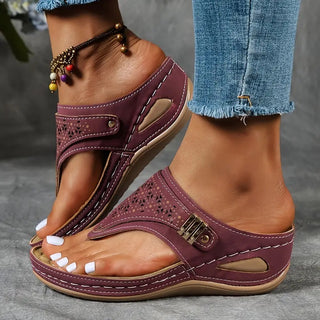 Élise Comfort Sandals — Contoured Footbed, Wide Straps
34,99 €
Élise Comfort Sandals — Contoured Footbed, Wide Straps
34,99 €
-
 Hivery Winter Shoes — Warm Lining, Cushioned Sole
34,90 €
Hivery Winter Shoes — Warm Lining, Cushioned Sole
34,90 €
-
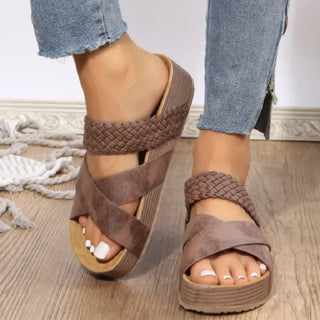 Women's Woven Casual Sandals - Summer Comfort
31,99 €
Women's Woven Casual Sandals - Summer Comfort
31,99 €