Hair Color and Style: Matching Your Look to Your Locks
Advice like "redheads should avoid red" has been circulating for forty years without anyone asking why. The answer fits in one word: undertone. It is not hair colour that decides, it is hair temperature, and you can measure it in thirty seconds.
Warm or cool: the daylight test
Stand near a window with no artificial light. Look at your hair at the root, where the sun has not lifted it.
- Golden, coppery, honey, red glints: warm undertone.
- Ashy, grey, blue or violet glints: cool undertone.
A second marker, more reliable still: hold a pure white fabric to your face, then an ecru one. Whichever makes your skin look rested tells you the family. Pure white suits cool, ecru suits warm. Same mechanism described in wearing white without mishaps, where the choice between optical and off-white changes everything.
Third marker, the one jewellers use: lay a gold chain and a silver chain side by side on your skin. One disappears, the other reads. The one that reads is yours.
What it actually changes
Undertone does not dictate which colours to wear. It dictates which version of a colour to wear. There is a warm red (tomato, brick) and a cool red (raspberry, burgundy). A warm green (olive, khaki) and a cool one (emerald, pine). Coral pink is warm, fuchsia is cool.
In other words, no colour is off limits. Only the shade shifts, and the gap can be tiny to the eye while making a real difference to your complexion.
By hair family
- Golden, strawberry or honey blonde. Warm family. Coral, camel, terracotta, olive, cream. Optical white hardens the face; ecru softens it.
- Ash or platinum blonde. Cool. Navy, grey, raspberry, emerald, pure white. Yellow-based beige flattens it.
- Warm brown, golden chestnut. Warm. Rust, mustard, bronze, khaki. The most forgiving family of all.
- Cool brown, blue-black. Cool. The only family that carries optical white and true black effortlessly, which is why strong contrast suits it so well.
- Red hair. Warm by definition. Green in every shade is red's complementary colour, which is why it works every single time. Cool pink, on the other hand, fights it directly.
- Grey and silver. Cool, almost always. Saturated, definite colours look superb; beige and washed-out pastels erase the face. This is the family where monochrome performs best.
Jewellery metal counts as much as the clothes
It is the detail closest to the face after the neckline, and the one chosen least consciously. Gold warms, silver cools. On grey or ash hair, yellow gold clashes; silver, steel and white gold agree. On red or golden blonde hair it is the reverse.
Our jewellery comes in both registers, and it is one of the few purchases where getting the temperature wrong shows immediately in a photograph.
When your hair colour changes
Colouring shifts your undertone, and with it the wardrobe that used to work. That explains the very common feeling of having nothing to wear after a colour change, even though the clothes are the same.
The useful reflex: redo the white-and-ecru fabric test a few days after colouring, and identify the two or three pieces that have crossed from the right side to the wrong one. There are usually few, and a scarf or a blouse in the new temperature is enough to rescue the rest. Our blouses work well for that: it is the piece closest to the face, so it has the most effect for the least money.
Free shipping over €35 and 30-day returns. The test belongs in daylight at home, not under a fitting-room strip light.
To build the look, we have these


Shop the Best Sellers edit
-
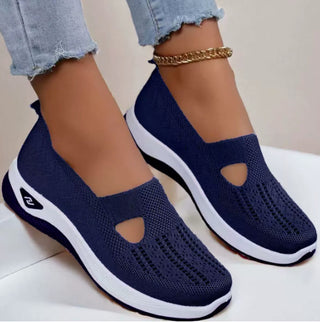 SNEEK Comfort Sneakers for Women — Memory Foam Insole, Breathable Knit
37,99 €
SNEEK Comfort Sneakers for Women — Memory Foam Insole, Breathable Knit
37,99 €
-
 Élise Comfort Sandals — Contoured Footbed, Wide Straps
34,99 €
Élise Comfort Sandals — Contoured Footbed, Wide Straps
34,99 €
-
 Hivery Winter Shoes — Warm Lining, Cushioned Sole
34,90 €
Hivery Winter Shoes — Warm Lining, Cushioned Sole
34,90 €
-
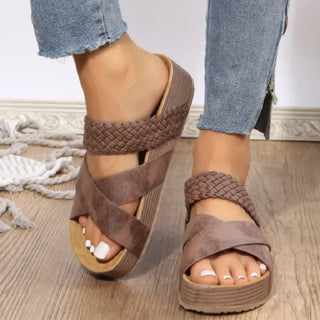 Women's Woven Casual Sandals - Summer Comfort
31,99 €
Women's Woven Casual Sandals - Summer Comfort
31,99 €