A top is seen more than any other garment. It frames the face, it's what people look at during a conversation, and it's what shows in full in a photo taken at a table. Two details of cut decide everything, and colour isn't one of them.
The two deciding points: shoulder and hem
The shoulder seam should end on the bone, right at the corner of the shoulder. Three centimetres lower and the arm looks heavier while the sleeve droops; three centimetres higher and the garment pulls, with the armhole restricting movement. It's the one point no simple alteration fixes on a blouse, so it's the first to check.
The bottom hem should never stop at the widest part of the hips. Two centimetres above or below, and the same blouse lengthens instead of widening. Over high-waisted trousers, a shorter top ending at the waistband works better than a long one covering it and erasing the waist.
The neckline works for you
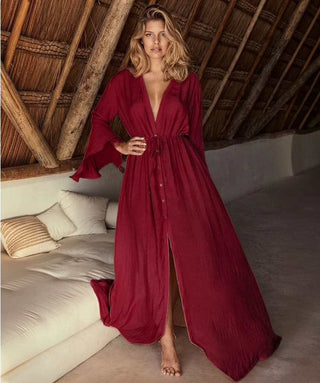
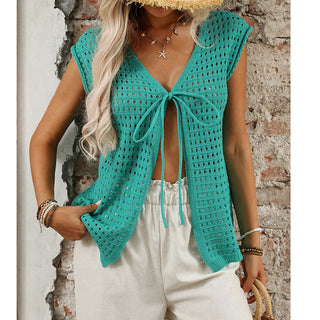
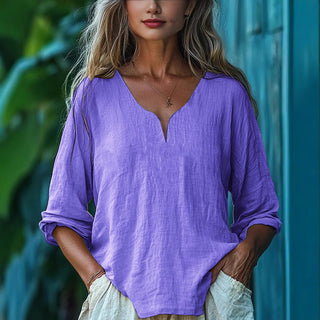
A V-neck lengthens the neck and opens the face: the safest choice with a fuller bust or a short neck. A boat neck widens the shoulder line, useful for balancing strong hips. A round neck is neutral, as long as it doesn't grip the base of the neck — a round neck cut too high compresses the whole silhouette in a photo.
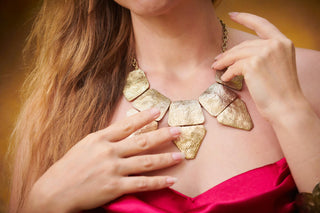
A reliable guide: the more open the neckline, the more discreet the jewellery can be. A fine chain on a V-neck does more than a statement necklace on a high neck, where it always ends up tangling with the fabric.
The gaping button
This is the number one flaw in blouses, and it has nothing to do with the size: it comes from a button badly placed relative to the bust. Test it in the fitting room, sitting down, breathing normally — not standing still in front of the mirror.
The answer isn't going up a size, which gives you shoulders that are too wide. It's a discreet press stud sewn between two buttons, two minutes of work, and the problem is gone for the life of the garment.
Sleeves and transparency
A three-quarter sleeve should end at the narrowest point of the forearm, never at the elbow or the wrist: badly placed, it shortens the arm. A long sleeve ends at the wrist bone, not on the hand.
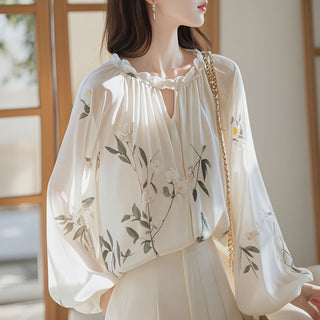
For transparency, don't trust shop lighting. Put your hand behind the fabric: if you can clearly see your fingers, you'll need a camisole underneath, so plan for it at the time of buying rather than discovering the problem on the first sunny day.
Tucked, half-tucked, or out
Three options, three different effects. Fully tucked: the waist is marked, the silhouette is clean, and that's what suits high-waisted trousers. Tucked at the front only, over a few centimetres: it marks the waist without flattening the fabric against the stomach, and it works with almost everything. Left out: the hem then has to land in the right place, or the line is lost.
A fluid blouse left out over high-waisted trousers gives away all the leg length the trousers just gained. Tucked at the front, it keeps it.
The fabric makes the difference
Viscose satin slips and catches the light, perfect in the evening, merciless over a full stomach after a meal. Cotton holds its shape and takes frequent washing. Fine knit bags at the elbow if it's too light. Our guide to textile fabrics explains how to read a composition before buying.
One blouse, three settings
The same plain blouse changes register entirely depending on what's around it. At the office, tucked into straight trousers with a closed shoe — see also what to wear to a job interview. At the weekend, left out over jeans, sleeves rolled twice above the elbow. In the evening, tucked, a fine belt, one piece of jewellery and nothing else.
Which is why a well-cut plain blouse earns its place more than a printed one, however pretty: a print gets recognised from one wear to the next, a plain colour is never noticed twice. See our blouses