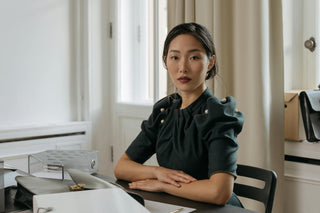
How to Dress for a Job Interview in 2026
The sector rule gives you the frame: formal in banking, law and insurance, smart casual in tech, looser in creative work. It says nothing about the part that matters, which is what actually gets noticed during the hour the interview lasts.
Find the dress code before you open your wardrobe
The information is nearly always online and almost nobody goes looking for it. The team page on the website, photos posted to LinkedIn, a recruitment video, the company's own social posts: ten minutes tells you whether people turn up in blazers or hoodies.
The rule that works after that fits in one line: dress one notch above what you saw. One notch, not three. Arriving in a strict suit at a team in jeans marks you as someone who didn't look, exactly like the reverse.
If the company gives nothing away, smart neutral never misses: high-waisted fluid trousers, a plain blouse, clean closed shoes. That works everywhere, from a law firm to a design agency.
What people actually look at
A recruiter doesn't examine your outfit. They register an overall impression in a few seconds, then their eyes go back to three places for the rest of the interview: your face, your hands, and whatever you put on the table.
Which gives three counter-intuitive priorities. The collar and shoulders, because they frame the face and a gaping collar or a shoulder seam sitting too low shows on every sentence. The hands, because they move while you talk — neat nails beat elaborate chipping polish. And the bag or folder sitting in plain view for an hour, which had better not be slumped.
Shoes get noticed, and not in a good way
Nobody compliments shoes in an interview. A scuffed heel, a lifting sole or dust-grey leather, on the other hand, are visible the moment you walk into the room, standing, a metre away from someone.
Skip the brand-new pair bought that morning too. Interviews rarely happen entirely in a chair: there's the journey, waiting on your feet, sometimes a tour of the offices, often stairs. A shoe that hurts makes you lose your thread at the worst moment. A comfortable shoe already worn two or three times is a far better bet than a flawless one you're wincing in.
Video interviews have their own rules
Half of first interviews now happen through a camera, and the framing changes everything. All anyone sees is a rectangle from your chest to the top of your head, which puts every bit of attention on the top half and nothing else.
A strong plain colour reads better than a print, which tires the eye through a webcam and can moiré. Avoid pure white: it makes the camera close down its exposure and darkens your face. Ecru, blue or a deep green sit much better. Large shiny earrings catch the light and pull the eye away — test them on screen beforehand, not during.
And get dressed properly, bottom half included. It isn't a moral point. You sometimes stand up to open a door or fetch a document, and the body holds itself differently when you're actually dressed.
The night before, not the morning of
Lay the whole outfit out the evening before and try all of it on, shoes and bag included. That's the only moment you'll find the missing button, the mark the dry cleaner didn't lift, or the trousers that shrank in the wash. On the morning itself there's no time to fix anything.
Three checks that take two minutes and save the day: the seams under the arms, the trouser hem with the shoes you plan to wear, and the jacket lining at the shoulders. And keep the new thing for later. An outfit that has never been worn always has a surprise in it, and a surprise in an interview is rarely a good one.
The real question
It isn't "does this look serious", it's "am I going to be thinking about it during the interview". A skirt you keep straightening, a collar that itches, a strap that slips: every adjustment costs a slice of the attention you owed the question. The outfit that wins is the one you forget the second you sit down.
See our blouses · See our high-waisted trousers
Pieces from the shop that go with this


Shop the Best Sellers edit
-
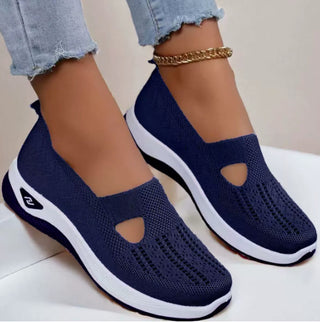 SNEEK Comfort Sneakers for Women — Memory Foam Insole, Breathable Knit
37,99 €
SNEEK Comfort Sneakers for Women — Memory Foam Insole, Breathable Knit
37,99 €
-
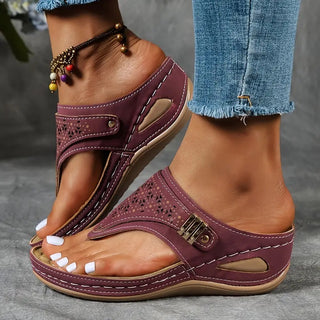 Élise Comfort Sandals — Contoured Footbed, Wide Straps
34,99 €
Élise Comfort Sandals — Contoured Footbed, Wide Straps
34,99 €
-
 Hivery Winter Shoes — Warm Lining, Cushioned Sole
34,90 €
Hivery Winter Shoes — Warm Lining, Cushioned Sole
34,90 €
-
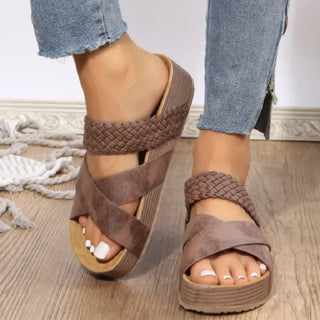 Women's Woven Casual Sandals - Summer Comfort
31,99 €
Women's Woven Casual Sandals - Summer Comfort
31,99 €