Sustainable Fashion on a Budget: How to Dress Responsibly Without Breaking the Bank
Fashion is the second most polluting industry in the world. It's a fact. But that doesn't mean the only solution is to dress in burlap sacks.
Eco-responsible fashion is simply making more thoughtful choices. And often, these choices are also better for your wallet - because a garment that lasts 3 years costs less per wear than a 5 euro garment that lasts 3 washes.
The 5 pillars of sustainable fashion
1. Buy less, but better
This is the fundamental pillar. Before every purchase, ask yourself: "Will I wear it at least 30 times?" If the answer is no, put it back. This simple test eliminates most impulse buys.
2. Prioritize natural materials
Cotton (organic if possible), linen, wool, silk - these materials naturally decompose and are often more comfortable than synthetic ones. Our cotton-linen collection is an excellent starting point.
3. Maintain properly
A well-maintained garment lasts twice as long. Wash less, wash cold, air dry. It's good for your clothes AND your electricity bill.
4. Repair before throwing away
A button that falls off, a seam that comes undone, a hem that unravels - these are 5-minute repairs that save a garment from the trash can.
5. Give a second life
What doesn't fit you anymore can make someone else happy. Donate, sell, exchange. The most sustainable clothing is that which continues to be worn.
Fabrics to prioritize
| Material | Impact | Comfort | Durability |
|---|---|---|---|
| Linen | Very low | Excellent | Very long |
| Organic cotton | Low | Excellent | Long |
| Wool | Moderate | Excellent | Very long |
| Tencel/Lyocell | Low | Very good | Long |
| Recycled polyester | Moderate | Good | Long |
Budget: is sustainable fashion more expensive?
At purchase, yes — often. But at "cost per wear", no. A t-shirt for $5 worn 5 times = $1/wear. An organic cotton t-shirt for $25 worn 100 times = $0.25/wear. Quality is ALWAYS cheaper in the long run.
Discover our eco-responsible selection — pieces made of natural materials, designed to last and respect both your budget and the planet.
If you want to put this into practice


Shop the Budget picks: affordable women's fashion edit
-
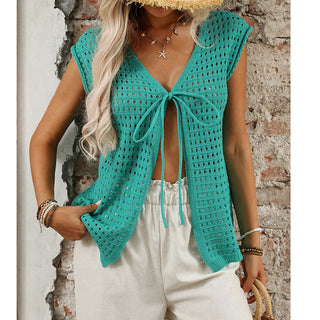 Short-Sleeve Lace Cardigan for Women
22,99 €
Short-Sleeve Lace Cardigan for Women
22,99 €
-
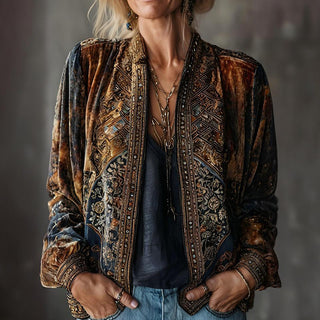 Bohemian Long-Sleeve Print Cardigan for Women by VoltÉlan
29,90 €
Bohemian Long-Sleeve Print Cardigan for Women by VoltÉlan
29,90 €
-
 Fluid Tunic for Women with Long Sleeves by VoltÉlan
24,90 €
Fluid Tunic for Women with Long Sleeves by VoltÉlan
24,90 €
-
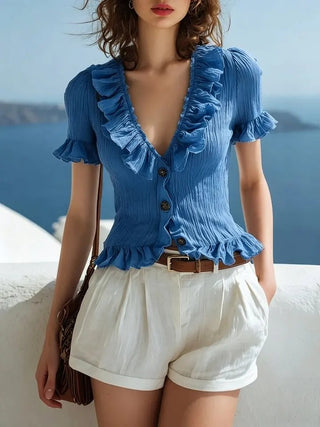
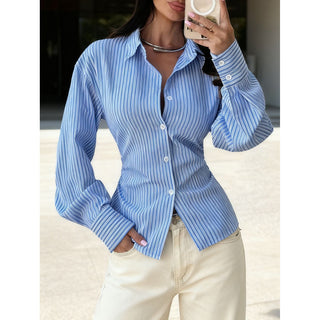 Woman's Blouse with Slightly Puffy V-Neck
26,99 €
Woman's Blouse with Slightly Puffy V-Neck
26,99 €